NANOSHIELD technology

Nano-ceramics that work on metal.

What's behind COPTON NANO oils: how nano-ceramic particles form the NANOSHIELD protective film.

Step by step

From the piston to the nano-film.

  1. 01 · Engine

    Only an oil film separates the piston from the cylinder

    The piston moves up and down dozens of times per second. The metal of the rings and the cylinder wall stays apart as long as a thin oil film holds between them.

  2. 02 · Risk zone

    At the top of the stroke the film is thinnest

    At top dead centre the piston stops for an instant while combustion pressure peaks — the oil wedge almost disappears. This is where rings and walls wear most. Let's zoom in.

  3. 03 · Layer 1 · Film

    Nano-ceramics coat the metal with a ≈ 100 nm film

    NANOSHIELD particles arrive with the oil and settle on the metal, forming a strong protective film about 100 nm thick on average.

  4. 04 · Layer 2 · Micro-bearings

    Sliding turns into rolling

    Spherical nanoparticles between the parts act like micro-bearings: sliding friction becomes rolling friction. Resistance and wear drop, and the engine uses less energy.

  5. 05 · Layer 3 · Repair

    Particles fill micro-scratches

    Nanoparticles settle in pits and micro-scratches in the metal and level the surface. This is called nano self-repair.

How NANOSHIELD works — diagram

What NANOSHIELD gives

Protection where an ordinary oil film falls short.

  • 01

    Rolling instead of sliding

    Nano-ceramic particles act like micro-bearings: sliding friction turns into micro-rolling.

  • 02

    Cold start

    The film stays on the parts after the engine stops, so protection is there from the first revolutions, before the oil is pumped through.

  • 03

    Traffic jams and start-stop

    Frequent stops and starts mean increased wear. The NANOSHIELD film reduces wear in these conditions.

  • 04

    Safety margin

    The film is stronger than an ordinary oil film, as the 2005 run showed: 5,050 km with the oil drained.

Test results for specific oils are in their product cards.

COPTON NANO record · 2005

5 050 kmwith no oil in the engine.

In December 2005, seven cars treated with COPTON nano-ceramics had their engine oil drained and drove Qingdao — Beijing — Hengyang and back non-stop.

cars
7cars
hours on the road
99,5hours on the road
km — the previous record
1524km — the previous record

Source: sinolub.com

Low SAPS

Gentle on exhaust aftertreatment

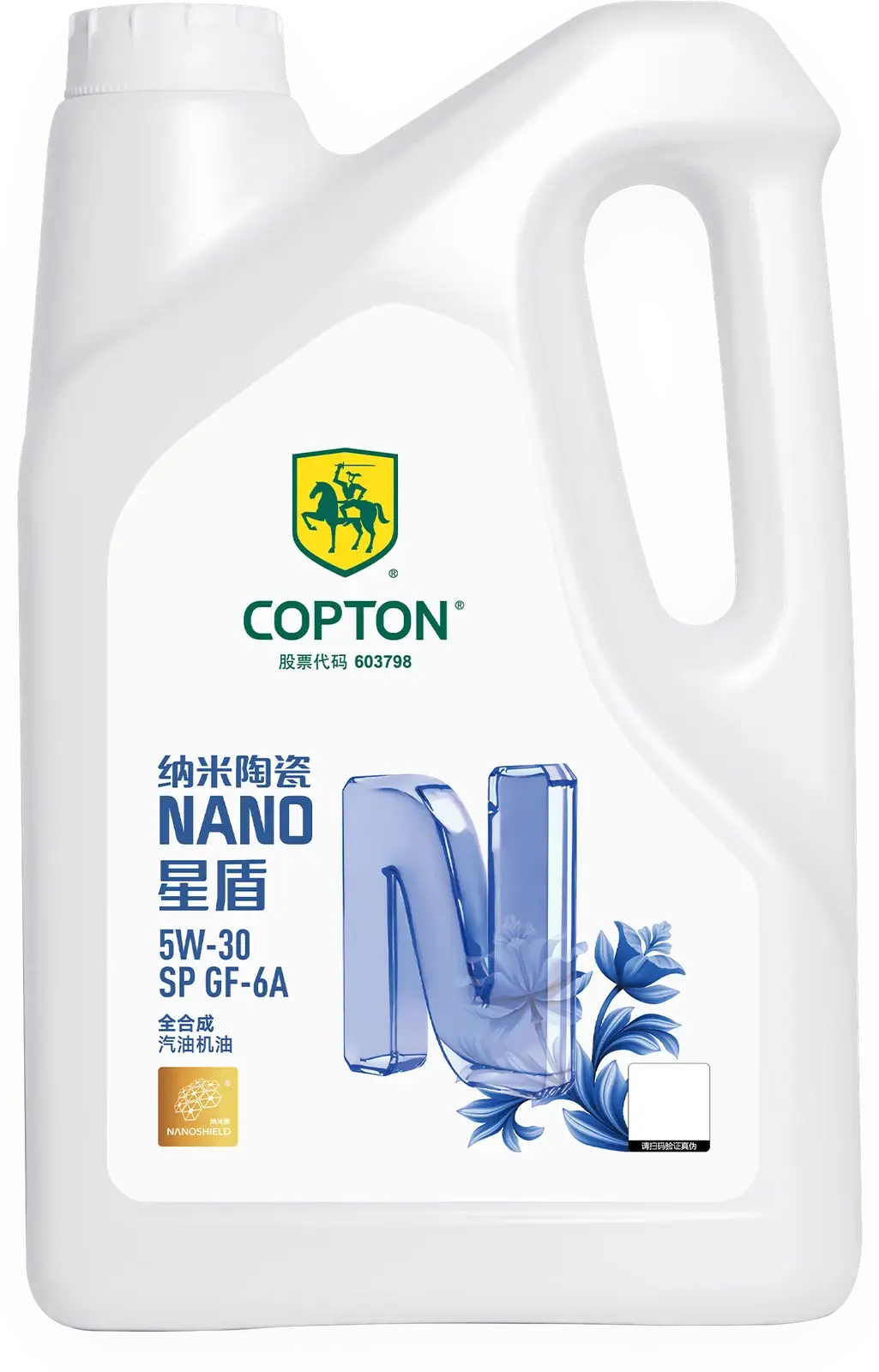
NANO Star Shield has low sulfur, phosphorus and sulfated ash content. It is designed for cars with GPF and DPF filters and catalytic converters.

COPTON NANO Star Shield 5W-30

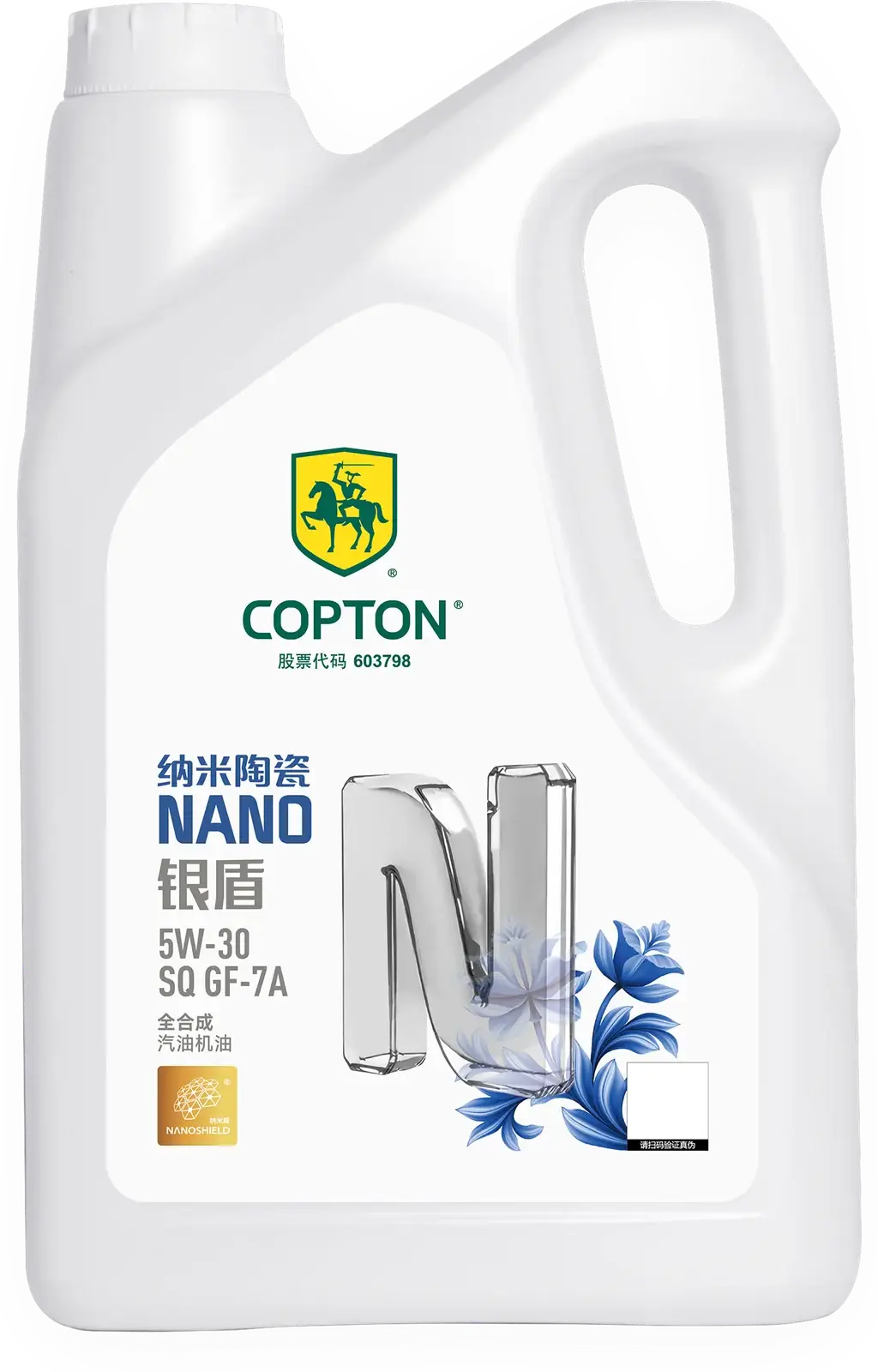
API SQ · ILSAC GF-7A

Current quality standards

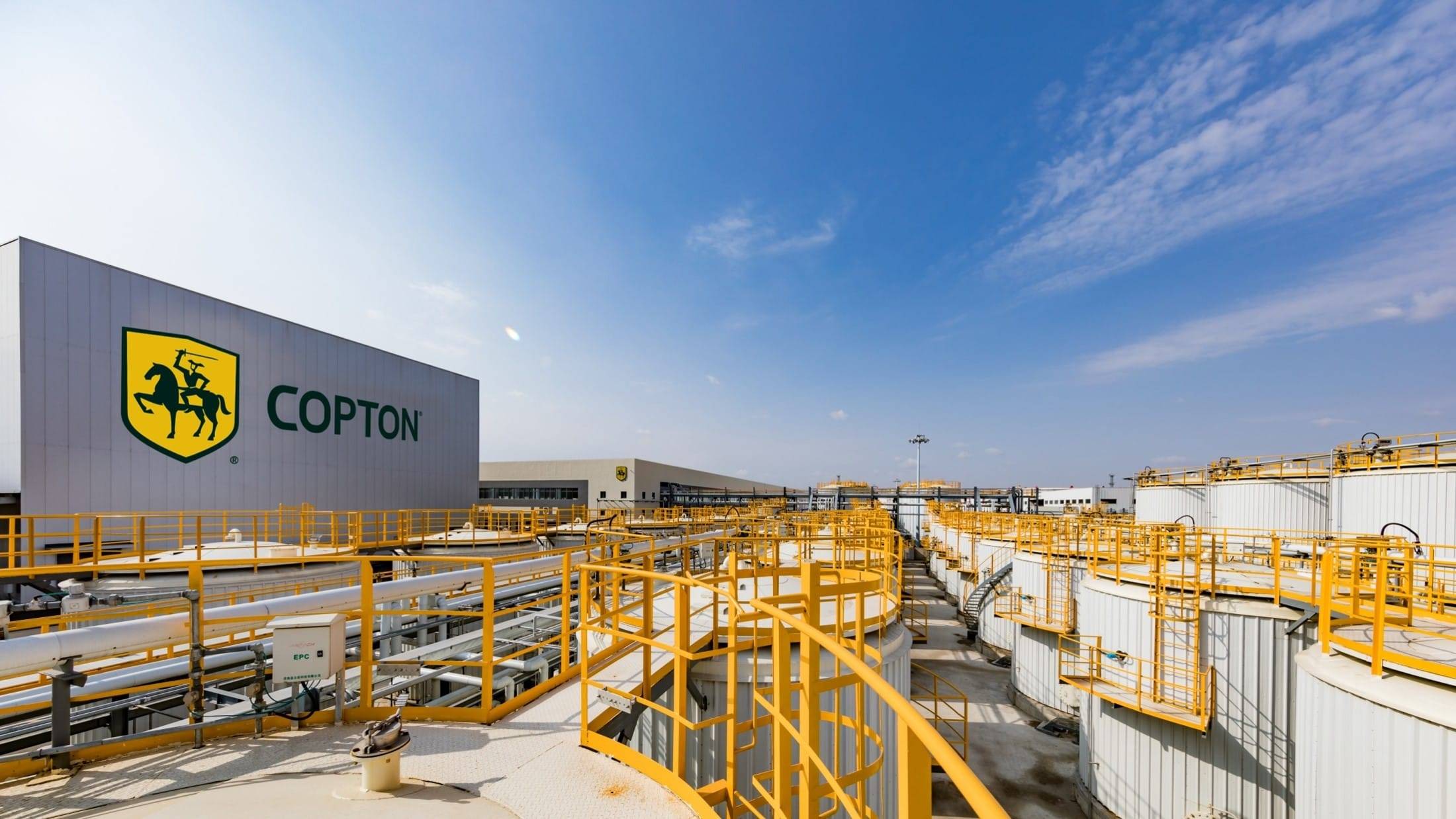
NANO Silver Shield, GT7 and COPTON Hybrid oils are made to API SQ and ILSAC GF-7A — standards for modern gasoline engines introduced in 2025. The oils are produced at COPTON's own plant in Qingdao.

COPTON NANO Silver Shield 5W-30

History

From a record to the 2025 standards.

  1. 2005

    COPTON nano-ceramics

    The manufacturer releases nano-ceramic engine oils. Cars with COPTON nano-ceramics cover 5,050 km with the oil drained.

  2. 2016

    Shanghai Stock Exchange

    Qingdao Copton Technology shares start trading on the A-share main board of the Shanghai Stock Exchange, code 603798.

  3. 2025

    API SQ and ILSAC GF-7A

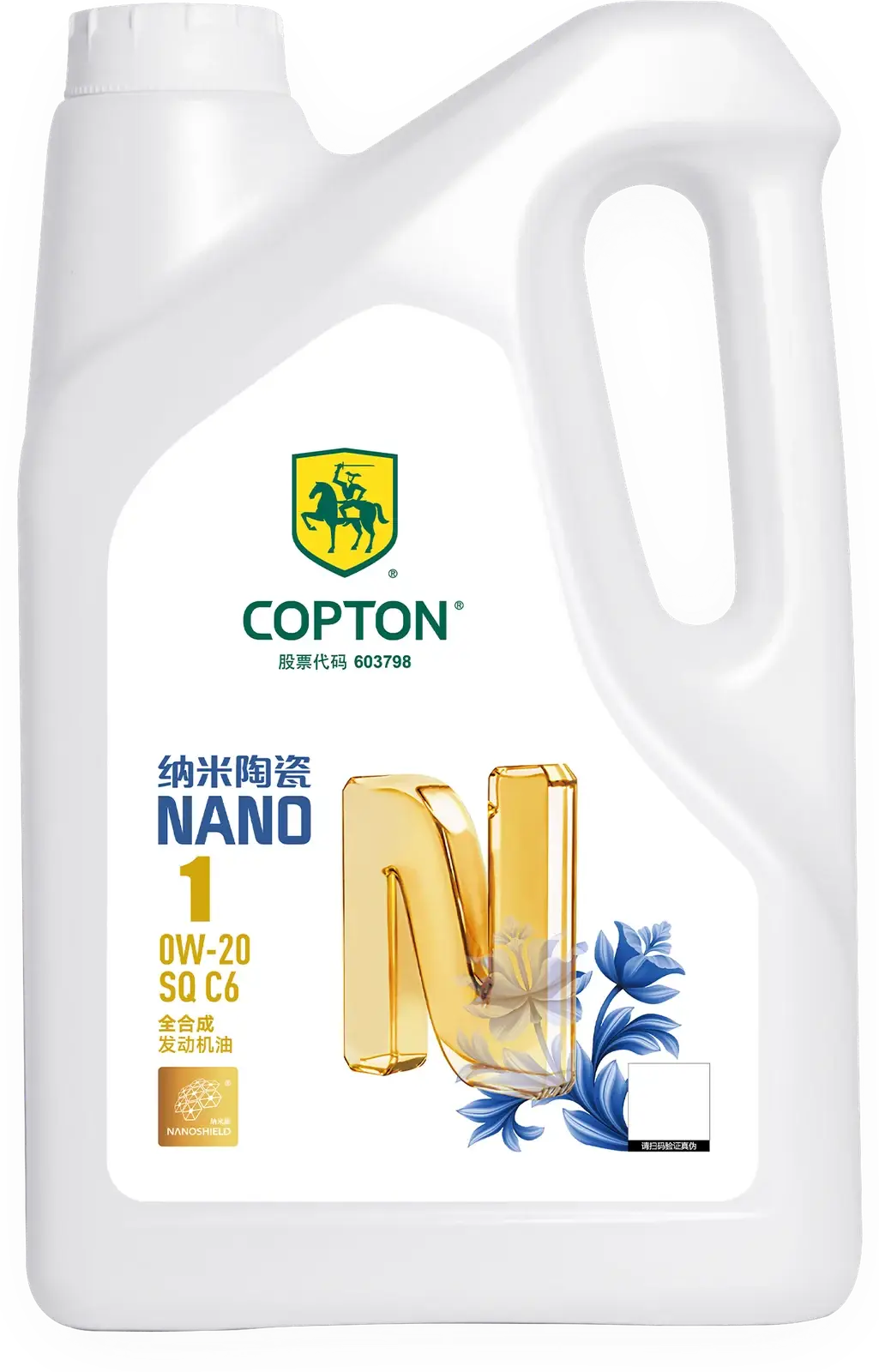
    New standards for gasoline engines are introduced. API SQ is declared for NANO 1, Silver Shield, Golden Shield, GT7, GT8 and GT9 oils.

Label standards — what they mean

API SQ · SP · SL/CF
American Petroleum Institute (API) categories for gasoline engines: SQ is current (2025), SP is the previous one (2020), SL is older. CF is a diesel engine category.
ILSAC GF-7A · GF-7B · GF-6A
International Lubricant Standardization and Approval Committee standards for low-viscosity fuel-saving oils: GF-7A is current, GF-7B is for 0W-16, GF-6A is the previous one.
ACEA C2 · C3 · C5 · C6
European Automobile Manufacturers' Association categories for low sulfated ash, phosphorus and sulfur oils — for gasoline and diesel engines with catalytic converters and particulate filters.
ACEA A3/B4
ACEA category for high-performance gasoline and diesel passenger car engines; oils in this class are full-ash.
API CK-4 · CJ-4 · CI-4 · CH-4 · CF-4
API categories for heavy-duty diesel engine oils — from CF-4 to CK-4, the most modern of those listed.
ACEA E7 · E11
ACEA classes for heavy-duty diesel engine oils for trucks and buses. E11 was introduced in the 2022 ACEA sequences.
API GL-5
Gear oil level for units with high contact and shock loads, including hypoid gears.
JASO MA2 · JASO FB · API TA
Motorcycle standards. JASO MA2 is for four-stroke engines with a wet clutch and confirms the right friction properties. JASO FB and API TA are for two-stroke engines.
CNG / LNG
Oils for gas engines running on compressed (CNG) and liquefied (LNG) natural gas.
Class 7
Brake fluid class with a high boiling point and low viscosity in frost. Values for COPTON CLASS7 are in its product card.

How we publish data

We state test figures, service life and fuel savings only with a source for the specific product. If there is no source, we don't publish it.

Certificates

Quality confirmed by audits.

An American Petroleum Institute licence, TÜV Rheinland management system certificates and an independent market study — from the manufacturer's document pack.

  • API · licence No. 2033

    API quality marks on engine oils

    The American Petroleum Institute licenses COPTON to use the API Service Symbol (“donut”) and the API Certification Mark (“starburst”) on its packs. The licence covers COPTON, NANO and GT oils: gasoline up to API SQ and ILSAC GF-7A, diesel up to API CK-4.

    Issued by
    American Petroleum Institute
    Valid until
    31.03.2027
  • ISO 9001:2015

    Quality management system

    Design, manufacture, sales and service of lubricants and antifreeze. Issued to the Qingdao Copton Petrochemical plant; first certified in 2018.

    Issued by
    TÜV Rheinland
    Valid until
    24.09.2027
  • VDA 6.1:2016

    German automotive quality standard

    Quality management system to the requirements of the German Association of the Automotive Industry (VDA) for the design and manufacture of lubricating oils and antifreeze.

    Issued by
    TÜV Rheinland
    Valid until
    25.08.2027
  • No. 1 · 2024

    No. 1 in nano engine oil sales in China

    Shangpu Consulting Group study: by sales volume in tonnes in 2024, COPTON ranks No. 1 among nano engine oil brands in China. The statement was issued in August 2025.

    Issued by
    Shangpu Consulting Group